Introduction
In a team we set out to explore digital spending habits, security precautions, and people’s attitudes toward virtual shopping. For centuries, carrying a physical wallet with currency was the norm. Over the past few decades, digital wallets and virtual currencies have become just as commonplace. While people have always feared physical theft, the virtual world presents different dangers, including scams and fraud.
The goal of this research project was to understand fears and misconceptions surrounding digital finances and to validate them through a thorough investigation. As online shopping becomes increasingly prevalent, financial habits are evolving. People’s relationships with banks today differ significantly from 10–20 years ago, with the rise of “neo-banks” further reshaping the landscape.

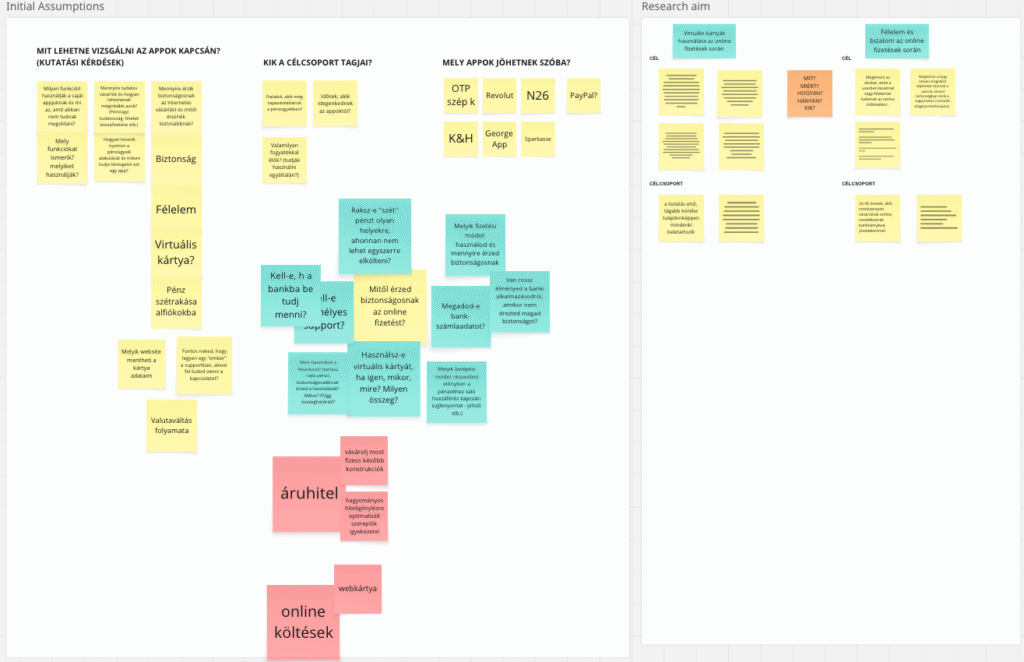
Initial assumptions:
- People use virtual cards for online shopping due to security concerns.
- Users over 50 are less open to digital financial solutions and apps.
- Younger generations (20–30) have less financial experience.
- A user-friendly banking app increases trust in financial services.
Our research aimed to explore
Security Perceptions
What makes a payment platform feel secure?
Misconceptions
What beliefs influence online transaction behaviors?
Virtual Cards
How do users interact with this specific service?
Methodology Methodology
Netnography
To expand on our hypotheses, we analyzed forums, groups, and subreddits related to digital banking. Communities around virtual banking services, such as Revolut, were particularly vocal. However, we had to filter extreme opinions, as dissatisfied users often dominate discussions without representing the majority.
One key insight was that many people treat neo-banks like Revolut as a safety net, using virtual cards for online purchases rather than as their primary account. Common reasons included:
- The app’s simplicity and user-friendliness.
- A reluctance to use it as a main banking account.
- A willingness to take risks on suspicious websites with a virtual card.

Interviews
We conducted 16 interviews with a diverse group of participants. The first half of the sessions focused on their relationship with digital payments, debit cards, and virtual cards. In the second half, we explored how they detect online fraud, phishing, and scams—discussing their experiences and strategies for identifying fake webshops.
Based on these insights, we categorized users into three types:
Minimalist
Prioritizes speed and efficiency, aiming to complete transactions quickly.
Thorough
Compares products across multiple platforms before purchasing.
Experienced
Values security and transparency, taking a methodical approach.
Many participants viewed online financial management as neither inherently positive nor negative—simply a part of life. Security was important, but so was convenience.
→ Some relied on banking apps to manage card information instead of saving details individually.
→ Others stored card details across multiple platforms for convenience, often without realizing how many places had their data.
→ Interestingly, many users did not consider Revolut a “real” bank account.
Survey
400+ responses
To validate our findings quantitatively, we conducted a survey, collecting over 400 responses: 200+ from Hungary and 200+ from German-speaking regions.
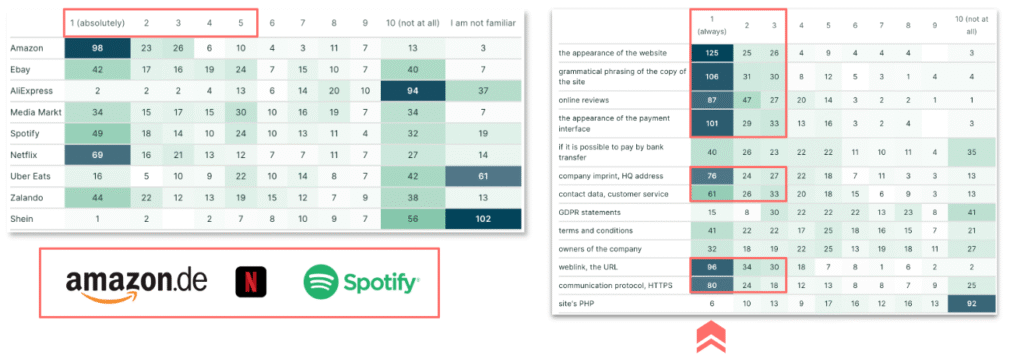
Key findings from Hungary:
- Neo-banks like Revolut are widely used, especially in urban areas.
- Users adopt neo-bank services primarily to minimize risk when shopping online.
- While users store debit card details in payment management apps, they tend to avoid saving them directly on e-commerce sites.
- Many users underestimate how often their card details are saved across platforms, particularly with subscription services like Netflix.
- People claim to be conscious about security but often take risks without realizing it.
Key findings from DACH regions:
-
Neo-bank adoption is significantly lower.
-
Greater trust in established brands like Amazon leads to a higher likelihood of saving credit card details.
-
Despite claiming to be security-conscious, their actual precautions were similar to Hungarian users.
Are We as Attentive as We Think? Attentive
Usability Testing
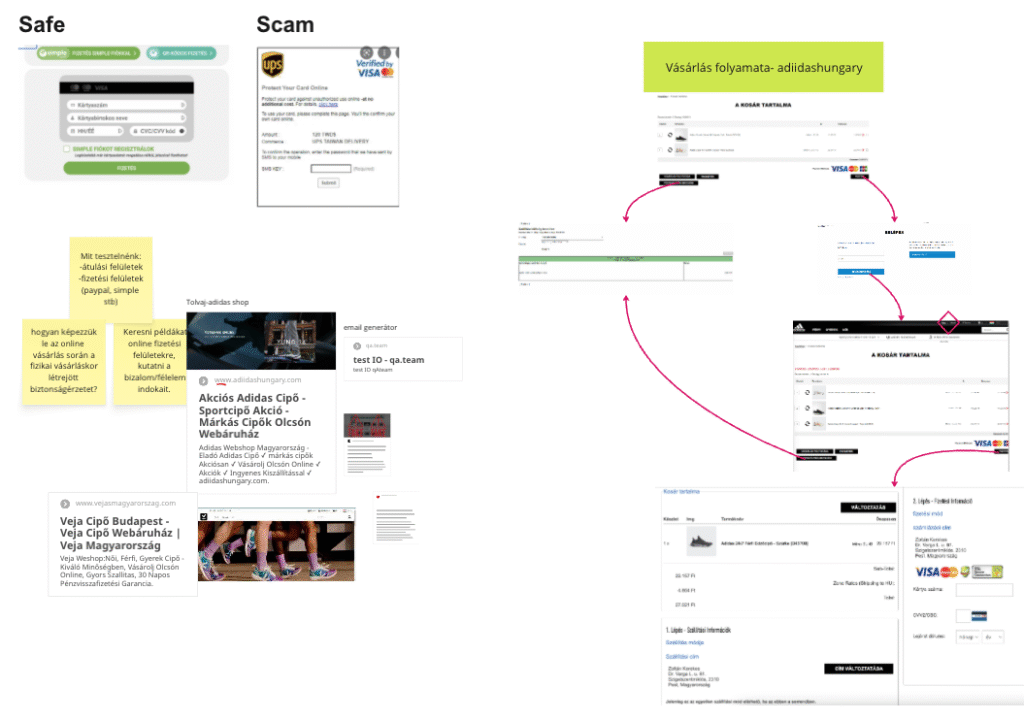
People often describe themselves as self-aware and cautious, but usability testing allowed us to measure whether they could truly recognize online dangers.
We set up controlled testing environments to ensure participants’ personal data remained safe while evaluating:
- How easily users recognize fake webshops.
- Why people fall for scams.
- Key warning signs of fraudulent sites.
- What happens when trust is lost?
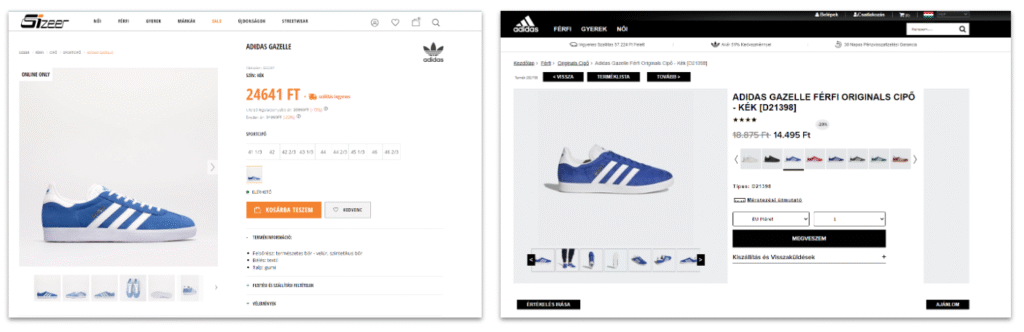
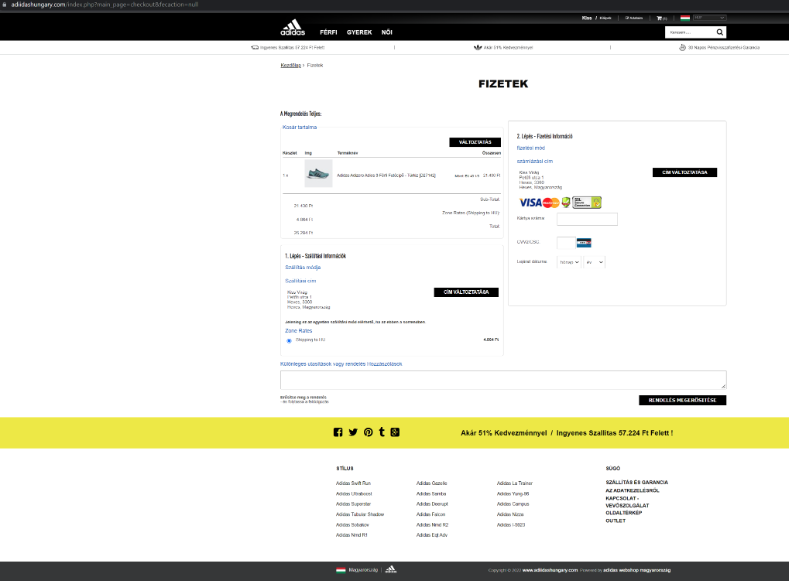
Participants were shown two online stores: the official Adidas webshop and a suspicious sneaker website.
Findings:
- User experience matters. People initially focus on visual elements (colors, photos) rather than security.
- Brand trust can be misleading. A strong brand sells both real and fake products.
- People want to believe. Many ignored warning signs to justify their purchases.
- Domain names are revealing. Fraudulent sites became obvious when participants examined URLs.
- Trust collapses suddenly. Once one red flag was noticed, users quickly spotted additional issues.
- Social proof is crucial. Reviews and peer recommendations significantly influenced trust in unfamiliar sites.

5-Second Test
Using UsabilityHub‘s “5-second test,” we examined how participants perceived checkout pages from both the real and fake webshops. They selected three options from a list of positive and negative adjectives.
- Official webshop: Average, familiar, chaotic.
- Fake webshop: Clear, simple, average.
Surprisingly, many users found the fake webshop visually cleaner than the real one. This highlights that people often equate polished design with trustworthiness—even when other warning signs exist.
Key Findings & Conclusion
This study confirmed that security is highly subjective. What makes one person feel secure might not reassure another. Over the course of this project, our understanding deepened significantly, allowing us to address each of our initial research questions.
Security Perception
A well-structured website with clear language, strong UI design, and social proof fosters trust.
Misconceptions
Despite claiming to be thorough, many users are susceptible to deception under the right circumstances.
Virtual Cards
Neo-bank services act as protective barriers for online transactions, reinforcing security.
Patience is Key:
- Users detect fraud more effectively when they take their time.
- Quick, impulse-driven purchases increase the risk of falling for scams (e.g., “limited stock” pressure tactics).
- A strong brand alone is not enough—fraudsters leverage branding to deceive consumers.
- Even when people sense something is off, they don’t always believe it could happen to them.
- Once they recognize one red flag, they quickly spot others.
Personal Takeaway
As a product designer, this research project was a unique experience because the outcome was not a digital product or feature, but insights and conclusions. Unlike designing a tangible interface, this required an investigative mindset—piecing together clues and refining our hypotheses over months of research.
The project concluded with a final presentation, where our team was praised for the depth of our analysis and the quality of our findings. Since then, I’ve integrated these research methods into my design process, both for early-stage product discovery and post-launch feedback collection.